
A few years ago, I was the person who walked into the grocery store without a list, grabbed whatever looked good, and somehow spent eighty dollars on ingredients that turned into three mediocre dinners. By Thursday, I was ordering takeout. Again. My fridge was full of half-used vegetables slowly wilting into science experiments.
Sound familiar?
The turning point came when I realised something simple: meal prepping is not about having more time. It is about using the time you already have more intentionally. When you combine that mindset with a tight budget, you end up with a system that feeds your family well without draining your wallet or your sanity.
This guide is built from real kitchen experience. No fancy equipment. No expensive ingredients. Just practical steps that work in a normal home kitchen.
Quick Takeaway: A solid meal prep routine can cut your weekly grocery bill by 30 to 40 per cent while reducing the time you spend cooking on busy weeknights. The key is planning before you shop, not after.
What Budget Meal Prep Actually Looks Like
Before we get into the steps, let us clear up a common misconception. Budget meal prep does not mean eating the same bland chicken and rice five days in a row. It also does not mean buying the cheapest possible food regardless of nutrition.
What it actually means is this: you decide what you are eating before the week starts, you buy only what you need, and you cook in batches that make sense for your schedule.
When I first started, I tried prepping every single meal for the entire week on Sunday afternoon. I spent four hours in the kitchen and by Wednesday I was so tired of looking at the same containers that I ordered pizza. That approach works for some people, but it did not work for me.
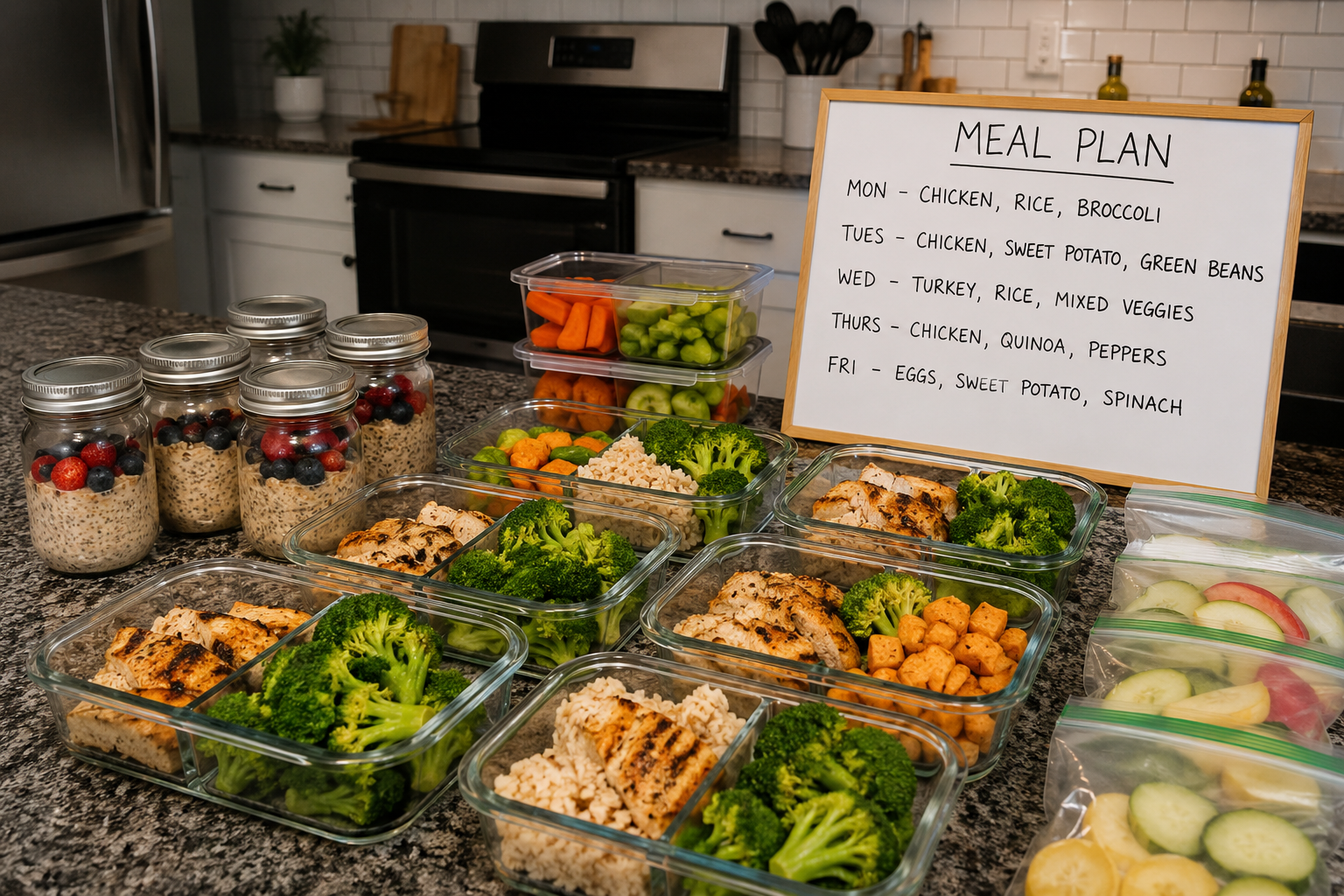
What did work was a simpler system. I prep components, not complete meals. I cook a big batch of grains, roast a tray of vegetables, cook one or two proteins, and wash and chop fresh items. Then I mix and match throughout the week. It gives me flexibility without requiring me to cook from scratch every night.
Step One: Build Your Budget-Friendly Pantry First
You cannot meal prep efficiently if your pantry is bare. But you also do not need to stock every spice and grain known to humanity. Start with a core list of versatile staples that show up in recipe after recipe.
Here is what I keep on hand at all times:
- Grains: Brown rice, white rice, pasta, oats, and flour for flatbread
- Proteins: Dried lentils, canned chickpeas, canned beans, eggs, and frozen chicken thighs
- Canned Goods: Diced tomatoes, tomato paste, coconut milk, and low-sodium broth
- Vegetables: Onions, garlic, carrots, cabbage, and potatoes (these keep for weeks)
- Seasonings: Salt, black pepper, cumin, paprika, garlic powder, and dried oregano
- Oils and Acids: Vegetable oil, olive oil, vinegar, and lemon juice
With just these ingredients, you can make dozens of different meals. The trick is learning which combinations work. Lentils and rice become a curry. Chickpeas and tomatoes become a stew. Eggs and vegetables become fried rice. The possibilities open up once you stop thinking in terms of recipes and start thinking in terms of components.
Money-Saving Tip: Buy dried beans and lentils in bulk. A one-pound bag of dried lentils costs about two dollars and yields eight to ten servings. Canned lentils are convenient, but they cost roughly three times as much per serving. The ten minutes of extra prep time is worth the savings.
Step Two: Plan Your Week in Fifteen Minutes
This is where most people get stuck. They open a blank page, stare at it, and give up. Planning does not need to be complicated. I use a simple three-step method every Sunday evening.
First, check what you already have. Look in your fridge, freezer, and pantry. What needs to be used up? That half onion from Thursday? The bag of spinach that is starting to look tired? Build your first meal around those items. It prevents waste and saves money.
Second, pick your proteins. I usually choose two proteins for the week. One might be chicken thighs because they are cheap and versatile. The other might be eggs or lentils. This gives variety without requiring you to buy five different meats.
Third, assign meals to days loosely. I do not lock myself into Monday equals stir-fry. Instead, I write down five dinner ideas that use my chosen ingredients. Then each morning, I look at my energy level and pick the one that makes sense. Some days I want to cook. Other days I want to reheat something I already made. The plan gives me options, not obligations.
Here is what a typical week looks like for my family:
- Monday: Lentil curry with rice (cook a double batch of lentils)
- Tuesday: Chicken and vegetable stir-fry with leftover rice
- Wednesday: Egg fried rice with whatever vegetables are left
- Thursday: Leftover lentil curry (it tastes better the next day anyway)
- Friday: Homemade flatbread with roasted vegetables and a simple yogurt sauce
- Saturday: Something new or a family favorite
- Sunday: Soup using all the vegetable scraps collected during the week
Step Three: Shop with a List and Stick to It
The grocery store is designed to make you spend more than you planned. End caps feature flashy deals on items you do not need. The bakery smells incredible. The snack aisle is conveniently placed right where your willpower is lowest.
I have one rule that has saved me hundreds of dollars: if it is not on the list, it does not go in the cart.
My list is organised by store section. Produce first, then pantry items, then dairy and eggs, then frozen. This keeps me from wandering. I also shop on the same day each week, which builds a rhythm and prevents the “I will just grab something quick” trips that always end up costing twenty dollars.
Another habit that helps: I never shop hungry. It sounds obvious, but I broke this rule last month and came home with a chocolate cake, two bags of chips, and a fancy cheese I still have not opened. Eat before you go.
Shopping Strategy: Compare unit prices, not package prices. A larger bag of rice might seem expensive upfront, but the cost per serving is usually much lower. I keep a small notebook in my kitchen where I jot down the unit prices of staples I buy regularly. After a few weeks, you will know exactly which store has the best deal on rice, which has the cheapest eggs, and where to buy spices in bulk.
Step Four: Cook Smarter, Not Longer
The actual cooking part is where people think meal prep takes forever. It does not have to. The secret is cooking multiple things at once and using your oven, stovetop, and any other tools you have simultaneously.
Here is my Sunday prep routine. It takes about ninety minutes and sets me up for the entire week:
Start the rice. I cook a big pot of brown rice first because it takes the longest. While it simmers, I move on to everything else.
Roast a sheet pan of vegetables. I chop whatever I have, toss it with oil and seasonings, and slide it into a hot oven. Roasted vegetables keep well and reheat beautifully. They also work in stir-fries, wraps, grain bowls, and soups.
Cook one protein in a skillet. Usually chicken thighs seasoned simply with salt, pepper, and paprika. I cook enough for two meals and slice it for easy grabbing.
Simmer a pot of lentils or beans. Dried lentils cook in about twenty minutes. I make a big batch, season them simply, and use them in multiple meals.
Wash and prep fresh items. While everything cooks, I wash lettuce, chop carrots for snacking, and portion out any fruits. Having ready-to-eat produce in the fridge makes a huge difference in whether I actually eat it.
By the time the rice is done, I have five or six components ready to go. I store them in clear containers so I can see what I have. Nothing gets forgotten in the back of the fridge.
Step Five: Store Everything So It Actually Gets Eaten
Storage might seem like a small detail, but it matters more than you think. Food that is stored poorly gets thrown out. Food that is visible and accessible gets eaten.
I use clear glass containers for almost everything. They do not hold odours like plastic; they last forever, and I can see exactly what is inside without opening the lid. For items that need to stay crisp, like cut vegetables, I store them with a paper towel to absorb moisture.
I also label everything with the date it was cooked. It takes five seconds with a piece of tape and a marker, and it prevents the “when did I make this?” guessing game. Most cooked foods are safe for four to five days in the refrigerator. If I know I will not eat something within that window, I freeze it immediately.
Freezer meals are another layer of budget protection. When chicken goes on sale, I buy extra and cook it in batches. When I make soup, I make a double batch and freeze half. Having a few ready-to-go meals in the freezer means I am never stuck ordering delivery because I am too tired to cook.
Storage Rule to Live By: Keep ready-to-eat foods at eye level in your fridge. The shelf you see first when you open the door should hold your prepped vegetables, cooked grains, and portioned proteins. Out of sight really does mean out of mind, and that is how good food ends up in the trash.
Common Meal Prep Mistakes and How to Avoid Them
I have made every mistake on this list. Learn from my failures so you do not repeat them.
Mistake One: Prepping too many different meals. Variety is nice, but trying to cook seven completely different dishes in one afternoon is exhausting and expensive. Stick to two or three base recipes and rotate them. Your future self will thank you.
Mistake Two: Ignoring texture. Some foods do not hold up well after a few days. Pre-chopped cucumbers get slimy. Pre-cooked pasta turns mushy. Leafy salads wilt. Plan your prep around ingredients that maintain their quality. Roast vegetables instead of steaming them. Use hearty grains like rice and quinoa instead of delicate ones.
Mistake Three: Forgetting about breakfast and lunch. Dinner gets all the attention, but breakfast and lunch are where meal prep shines. Overnight oats take five minutes to assemble and last all week. A big batch of egg fried rice makes excellent lunches. If you only prep dinner, you are missing the biggest opportunity to save time and money.
Mistake Four: Being too rigid. Life happens. Some weeks you will not feel like cooking on Sunday. Some weeks your plans will change. A meal prep system that falls apart the moment you deviate from the plan is not a good system. Build in flexibility. Prep enough to get you through three or four days, not seven. Leave room for spontaneity.
A Sample Budget Breakdown
People often ask me how much meal prep actually saves. Here is a realistic comparison based on my own grocery receipts.
Before meal prep, my family of three was spending about one hundred and twenty dollars per week on groceries, plus another sixty to eighty on takeout and convenience food. That is roughly two hundred dollars total.
After switching to a meal prep system, our weekly grocery bill dropped to about eighty dollars. We still eat out occasionally, maybe once a week, but it is planned and budgeted. Our total food spending now sits around one hundred dollars per week.
That is a savings of about one hundred dollars per week, or five thousand two hundred dollars per year. The time investment on Sunday is about ninety minutes. That works out to roughly sixty-five dollars per hour of prep time. I do not know many side hustles that pay that well.
Getting Started This Week
If you have never meal prepped before, do not try to do everything at once. Start small. Pick one recipe from your current rotation and make a double batch. See how it feels to have dinner ready on a busy Tuesday. Notice how much easier it is to resist the takeout menu when you know food is already waiting at home.
Once that feels comfortable, add another component. Maybe you prep your grains for the week. Then your vegetables. Then your proteins. Each small step builds the habit. Within a month, you will have a system that works for your life, your budget, and your schedule.
The goal is not perfection. The goal is a kitchen that works for you instead of against you.
Related Articles
- Pantry-Based Meals I Rely On When Money Is Tight
- Simple Meal Prep Routine for Busy Schedules
- How I Stretch Ingredients to Make More Meals
- Step-by-Step Guide to Weekly Meal Planning
- Budget-Friendly Chicken and Vegetable Bake Recipe
- Easy Bean and Rice Skillet Dinner for Busy Weeknights
- Cheap Pasta Recipes Using Everyday Kitchen Staples
- Quick Egg Fried Rice with Minimal Ingredients
Sources and References
- Harvard T.H. Chan School of Public Health, The Healthy Eating Plate — Guidance on balanced meal composition and whole food choices.
- Julia Pacheco, Eating Dinner For $1.60 A Day (Full Month) — Practical demonstration of ultra-budget meal planning using pantry staples.
About the Author: The Recipe Harbour team spends most of their time in home kitchens, testing recipes that work for real families with real budgets. We believe good food should not require a culinary degree or a high income.

Arman Haleem is a passionate food content writer dedicated to simplifying everyday cooking. With a focus on practical recipes, budget-friendly meals, and time-saving kitchen strategies, Arman creates content that fits real-life routines. His approach centers on making healthy eating more accessible without adding complexity. Through Recipe Harbor, he aims to help readers build sustainable cooking habits and feel more confident in the kitchen, regardless of their experience level.