
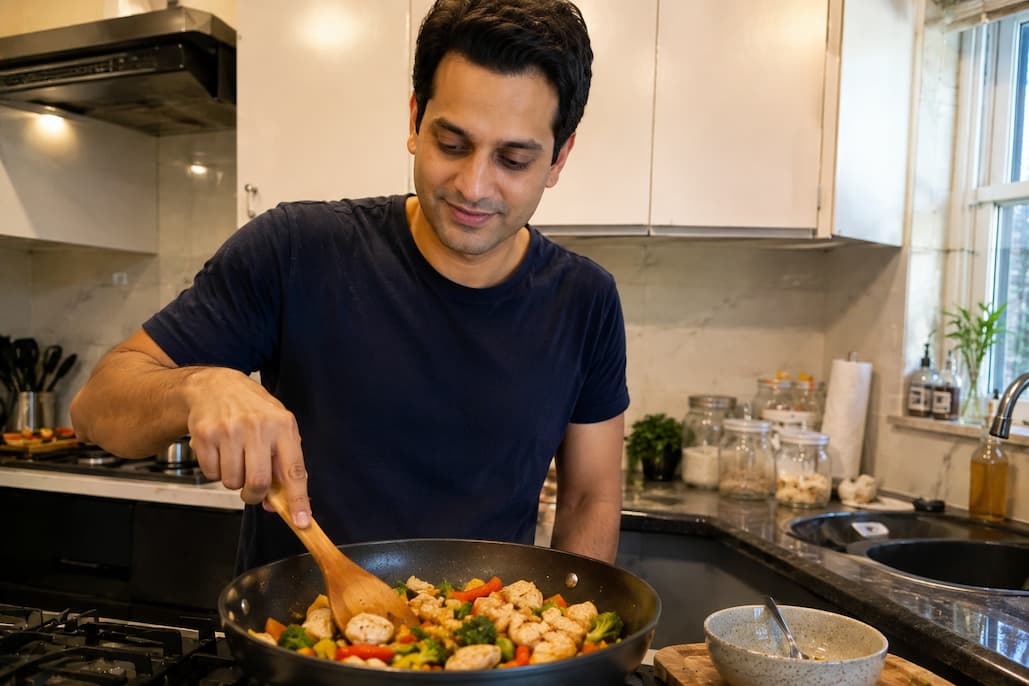
Quick Take: This one-pan chicken and vegetable stir-fry delivers a complete, balanced dinner in under 30 minutes. Packed with lean protein, colourful vegetables, and a light homemade sauce, it is the kind of recipe you will return to again and again when time is short but nutrition still matters.
There is a reason stir-fry has stood the test of time across so many cultures. It is fast, it is flexible, and when done right, it is one of the healthiest ways to put dinner on the table. The challenge most home cooks face is not the technique itself, but knowing how to build a stir-fry that is genuinely balanced rather than just a pile of ingredients in a hot pan.
This recipe solves that problem. It uses a simple formula: one protein, three vegetables, one sauce, and one pan. The result is a meal that checks every box for a healthy dinner. It is high in protein, rich in fibre, loaded with vitamins, and light enough that you won’t feel weighed down afterward. Best of all, cleanup is minimal because everything cooks in a single skillet.
Why This Stir-Fry Fits a Healthy Diet
Before diving into the recipe, it helps to understand what makes a stir-fry genuinely healthy rather than just convenient. Many restaurant stir-fries are loaded with oil, sugary sauces, and oversized portions of white rice. This version flips that script.
The chicken provides lean protein without excess saturated fat. The vegetables deliver fibre, vitamins, and volume that help you feel full. The sauce uses minimal oil and relies on aromatics and acidity for flavour instead of heavy sugar or salt. And because you control every ingredient, there are no hidden preservatives or additives.
What One Serving Delivers
Approximately 380 calories, 35g protein, 12g carbohydrates, 18g healthy fats, and 8 g fibre. These numbers will vary slightly based on your exact vegetable choices and portion sizes, but the macronutrient balance remains consistently solid.
Ingredients You Will Need
For the Stir-Fry
- Chicken breast: 500g, sliced into thin strips against the grain
- Bell peppers: 2 large, any color, sliced into strips
- Broccoli: 2 cups of small florets
- Carrots: 2 medium, julienned or thinly sliced
- Garlic: 4 cloves, minced
- Fresh ginger: 1 tablespoon, minced
- Avocado oil or olive oil: 2 tablespoons
- Sesame seeds: 1 tablespoon, for garnish
- Green onions: 2 stalks, sliced, for garnish
For the Light Stir-Fry Sauce
- Low-sodium soy sauce: 3 tablespoons
- Rice vinegar: 2 tablespoons
- Honey or maple syrup: 1 teaspoon (optional, for balance)
- Cornstarch: 1 teaspoon, mixed with 2 tablespoons water
- Red pepper flakes: 1/4 teaspoon (optional, for heat)
Pro Tip: Slice your chicken breast when it is slightly frozen. A firmer texture makes it much easier to cut thin, even strips that cook quickly and uniformly. Let the slices thaw completely before cooking.
Choosing the Best Vegetables for Stir-Fry
Not every vegetable belongs in a stir-fry. The best choices are ones that cook quickly while retaining some texture. You want a bite, not mush.
Bell peppers add sweetness, colour, and a satisfying crunch. They also cook fast, making them ideal for high-heat methods. Broccoli provides fibre and a robust texture. The key is cutting the florets small enough that they cook through in minutes without becoming soggy. Carrots contribute natural sweetness and a contrasting crispness. Julienning them thinly ensures they soften just enough without losing their structure.
Other excellent options include snap peas, mushrooms, zucchini, cabbage, and bok choy. The rule is simple: pick vegetables of different colours and textures, and cut them into similar sizes so they cook evenly.
Kitchen Tools You Will Need
Stir-frying does not demand specialised equipment, but the right tools make a difference.
- Large skillet or wok: A 12-inch skillet works perfectly. A wok is traditional but not essential.
- Sharp chef’s knife: Thin, even cuts are non-negotiable for proper stir-fry texture.
- Cutting board: Preferably a large one with enough room to organise prepped ingredients.
- Tongs or a wide spatula: For moving ingredients quickly and efficiently.
- Small bowl: For mixing the sauce before it hits the pan.
Avoid This Mistake: Do not use a small pan. Overcrowding traps steam, which boils your ingredients instead of searing them. The result is soggy vegetables and rubbery chicken. A large pan with plenty of surface area is essential.
Step-by-Step Cooking Instructions
Step 1: Prep Everything FirstStir-fry moves fast. Have every ingredient washed, chopped, and measured before you turn on the stove. This is called mise en place, and it is the difference between a smooth cook and a chaotic one. Mix your sauce in a small bowl and set it aside.
Step 2: Heat the Pan ProperlyPlace your skillet over medium-high heat and let it warm for two to three minutes. The pan should be hot enough that a drop of water sizzles and evaporates within a second. Add one tablespoon of oil and swirl to coat the surface evenly.
Step 3: Sear the ChickenAdd the chicken strips in a single layer. Let them cook undisturbed for two minutes to develop a golden crust. Then stir and cook for another two to three minutes until just cooked through. Remove the chicken from the pan and set it aside on a plate. It will finish cooking later.
Step 4: Cook the VegetablesAdd the remaining tablespoon of oil to the pan. Start with the carrots and broccoli, as they take the longest. Stir-fry for three minutes. Add the bell peppers, garlic, and ginger. Continue cooking for another two minutes until the vegetables are tender-crisp and brightly colored.
Step 5: Combine and SauceReturn the chicken to the pan. Pour the prepared sauce over everything. Stir constantly for one to two minutes until the sauce thickens slightly and coats the chicken and vegetables evenly. The cornflour slurry will create a light glaze rather than a heavy, gloopy sauce.
Step 6: Garnish and ServeRemove the pan from heat. Sprinkle with sesame seeds and sliced green onions. Serve immediately, either on its own or over a small portion of brown rice, quinoa, or cauliflower rice for a lighter option.
Common Stir-Fry Mistakes to Avoid
Even a simple technique has pitfalls. Here are the errors that trip up most home cooks:
- Adding sauce too early: The sauce should go in at the end. Adding it early causes steaming and prevents proper searing.
- Using too much oil: Two tablespoons are plenty for a full pan. Extra oil makes the dish greasy without adding flavour.
- Skipping the prep: Stir-fry waits for no one. If you are still chopping while the pan is hot, something will burn.
- Cooking on low heat: Stir-fry needs high heat to create that signature char and texture. Medium-high is the minimum.
- Overloading the pan: Cook in batches if necessary. A crowded pan drops the temperature and ruins the sear.
Healthy Variations You Can Try
Vegetarian Protein Bowl
Replace the chicken with firm tofu, tempeh, or chickpeas. Press the tofu for twenty minutes before cubing and pan-searing it until golden. The sauce and vegetables remain exactly the same.
Low-Carb Version
Serve the stir-fry over cauliflower rice or shredded cabbage instead of grains. You can also increase the vegetable portion and reduce the chicken slightly for a lighter meal.
Spicy Garlic Stir-Fry
Double the garlic, add one sliced fresh chilli, and increase the red pepper flakes to one teaspoon. Finish with a squeeze of lime juice for brightness.
Mediterranean-Inspired Stir-Fry
Swap the soy sauce for lemon juice and olive oil. Use zucchini, cherry tomatoes, and spinach as your vegetables. Add a sprinkle of feta cheese and fresh oregano at the end instead of sesame seeds.
What to Serve With This Stir-Fry
This stir-fry is a complete meal on its own, but pairing it with the right side can round out the plate.
| Side Option | Why It Works | Best For |
|---|---|---|
| Brown rice | Adds whole grains and sustained energy | Post-workout dinners |
| Quinoa | Extra protein and a nutty flavor | Vegetarian versions |
| Cauliflower rice | Keeps carbs low while adding volume | Low-carb or keto diets |
| Side salad | Extra greens and freshness | Lighter evening meals |
| Miso soup | Warm, savory starter that complements Asian flavors | Complete restaurant-style dinner |
Storage and Meal Prep Tips
This stir-fry stores remarkably well, making it ideal for meal prep.
Meal Prep Best Practices
- Refrigeration: Store in airtight containers for up to four days. The vegetables will soften slightly, but the flavour improves as the sauce marinates.
- Freezing: Not recommended. The vegetables lose their crisp texture when thawed, and the sauce can become watery.
- Reheating: Warm gently in a skillet over medium heat with a splash of water to revive the sauce. Microwave in short intervals, stirring between each, to avoid rubbery chicken.
- Prep ahead: Chop all vegetables and mix the sauce the night before. Store separately in the refrigerator. In the morning, dinner will be ready in ten minutes.
The Bigger Picture: How This Recipe Fits a Balanced Diet
One recipe will not transform your health, but building a repertoire of reliable, nutritious meals absolutely will. This stir-fry embodies the principles of a balanced plate: lean protein, abundant vegetables, healthy fats, and minimal processed ingredients.
It also aligns with research on dietary patterns that support long-term health. Diets rich in vegetables, lean proteins, and whole foods are consistently associated with lower risks of heart disease, better weight management, and improved energy levels. The key is not perfection but consistency. Having a go-to recipe like this in your rotation makes healthy eating the default rather than the exception.
Remember: A balanced diet is built meal by meal, not by following a strict plan. This stir-fry is one practical tool in a larger toolbox. Pair it with the other healthy recipes on this site, and you will find that eating well becomes easier every week.
Frequently Asked Questions
Can I use chicken thighs instead of breast?Yes. Chicken thighs are juicier and more forgiving, though slightly higher in fat. They work beautifully in stir-fry. Just trim excess fat and slice them similarly thin.
Is soy sauce necessary, or can I use a substitute?Coconut aminos make an excellent soy-free alternative with a similar umami profile and less sodium. Tamari is another good option if you need gluten-free soy sauce.
How do I keep vegetables crunchy in a stir-fry?High heat, a large pan, and short cooking times are the three keys. Do not cover the pan, as trapped steam softens vegetables. Add quick-cooking vegetables like spinach or snap peas in the final minute.
Can I make this stir-fry without oil?You can use a nonstick pan with a splash of water or broth for a oil-free version, though you will sacrifice some of the sear and depth of flavor. A small amount of oil is worth it for the texture it provides.
What is the best pan for stir-fry if I do not own a wok?A large, heavy-bottomed stainless steel or cast-iron skillet works perfectly. The key is surface area and the ability to hold high heat. Avoid lightweight nonstick pans, as they cannot reach the temperatures needed for proper stir-frying.
Final Thoughts
A healthy dinner does not require hours in the kitchen or a long list of exotic ingredients. This one-pan chicken and vegetable stir-fry proves that nutritious eating can be fast, affordable, and genuinely delicious. Master this recipe, and you will have a reliable foundation for countless weeknight meals.
The real secret is not the recipe itself, but the habit it helps you build. When healthy cooking feels effortless, you do it more often. And when you do it more often, the results speak for themselves. Start tonight. Your future self will thank you.
Sources & References
- U.S. Department of Agriculture (USDA). FoodData Central: Chicken Breast, Raw. https://fdc.nal.usda.gov/
- Harvard T.H. Chan School of Public Health. The Nutrition Source: Healthy Eating Plate. https://www.hsph.harvard.edu/nutritionsource/healthy-eating-plate/
- Mayo Clinic. Healthy Cooking Techniques: Boost Flavour and Cut Calories. https://www.mayoclinic.org/healthy-lifestyle/nutrition-and-healthy-eating/in-depth/healthy-cooking/art-20049546
- Academy of Nutrition and Dietetics. Stir-Fry: A Healthy Cooking Method. https://www.eatright.org/
- World Health Organization (WHO). Healthy Diet: Fact Sheet. https://www.who.int/news-room/fact-sheets/detail/healthy-diet

Arman Haleem is a passionate food content writer dedicated to simplifying everyday cooking. With a focus on practical recipes, budget-friendly meals, and time-saving kitchen strategies, Arman creates content that fits real-life routines. His approach centers on making healthy eating more accessible without adding complexity. Through Recipe Harbor, he aims to help readers build sustainable cooking habits and feel more confident in the kitchen, regardless of their experience level.