
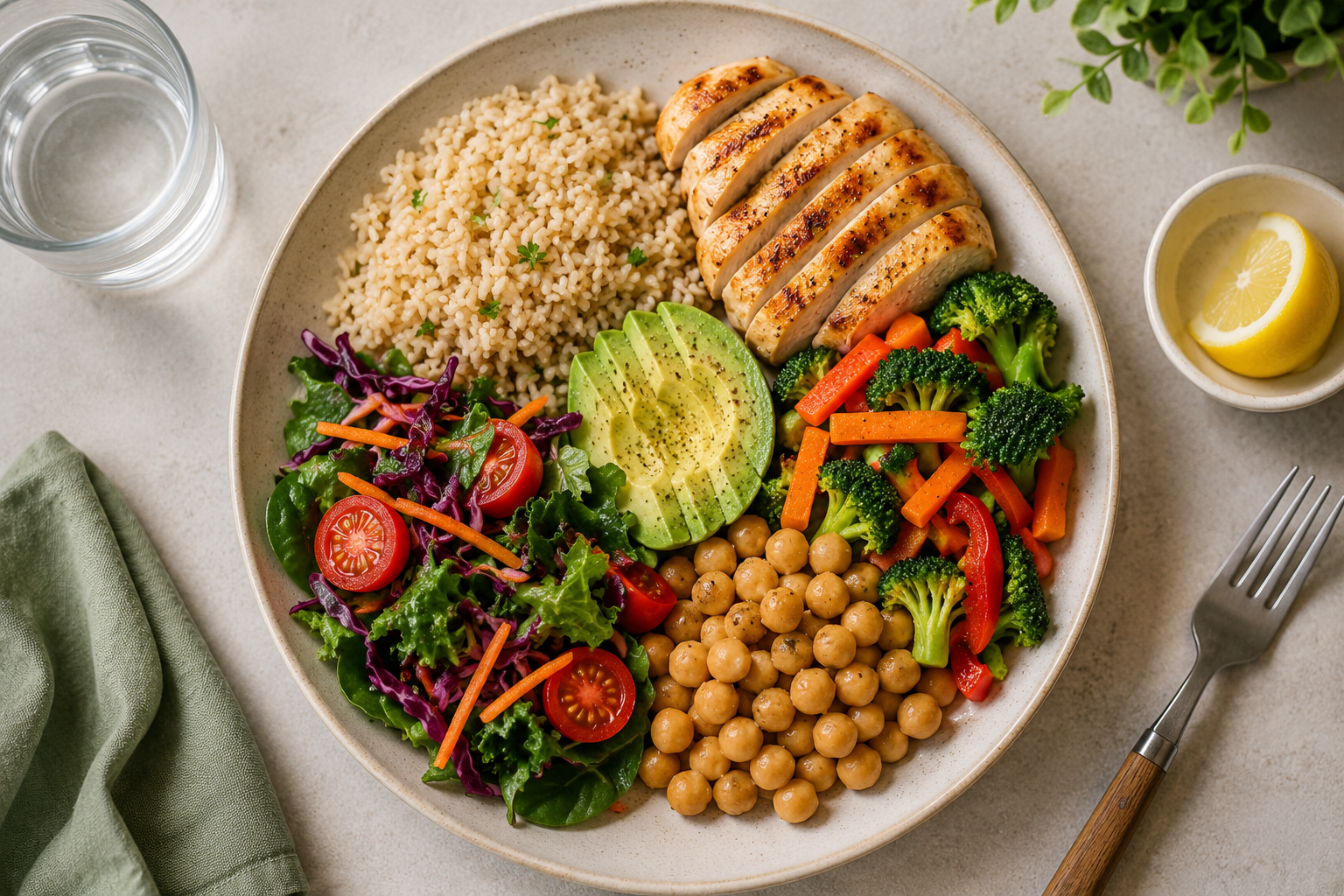
Healthy eating can feel confusing when you’re surrounded by diet trends, conflicting advice, and complicated meal plans. Many people want to eat better but don’t know where to start or how to build meals that feel satisfying and sustainable. The idea of a balanced plate simplifies everything. Instead of counting every calorie or following strict rules, you can focus on building meals that naturally include the right mix of nutrients.
This guide explains what a balanced plate looks like in everyday meals and how beginners can easily apply this approach at breakfast, lunch, dinner, and snacks. The goal is simple: make eating balanced, enjoyable, and practical.
Why the Balanced Plate Method Works
The balanced plate approach focuses on combining different food groups in the right proportions. This method helps create meals that provide energy, satisfaction, and variety without feeling restrictive.
Benefits of the balanced plate approach:
- Prevents overeating by keeping meals filling
- Reduces cravings by including all major nutrients
- Simplifies meal planning and grocery shopping
- Encourages variety and flexibility
Instead of labelling foods as “good” or “bad”, this method focuses on balance and moderation.
The Simple Balanced Plate Formula
A balanced plate can be visualised as a circle divided into sections. This visual makes meal building easy and repeatable.
Basic balanced plate proportions:
- Half the plate: vegetables and fruits
- One quarter: protein foods
- One quarter: carbohydrates or grains
- Small portion: healthy fats
This formula works for nearly every meal and cuisine.
Why Vegetables Take Half the Plate
Vegetables are the foundation of balanced eating because they add volume, fibre, and flavour to meals. Filling half the plate with vegetables helps you feel satisfied without needing large portions of calorie-dense foods.
Easy vegetables to include:
- Leafy greens
- Tomatoes
- Carrots
- Broccoli
- Peppers
- Cucumbers
- Zucchini
Simple ways to prepare vegetables:
- Roasting with spices
- Stir-frying with garlic
- Adding to soups and stews
- Serving raw with dips
Vegetables make meals colourful, fresh, and filling.
The Role of Protein in Every Meal
Protein helps meals feel satisfying and helps maintain energy throughout the day. Including protein in each meal reduces hunger and supports consistent eating habits.
Common protein choices:
- Eggs
- Chicken or turkey
- Fish
- Yogurt and dairy
- Beans and lentils
- Tofu and plant proteins
Adding protein to every meal is one of the easiest ways to improve meal balance.
Why Carbohydrates Are Still Important
Carbohydrates often get misunderstood, but they play an essential role in balanced meals. They provide energy and help meals feel complete.
Healthy carbohydrate options:
- Rice
- Potatoes
- Whole-grain bread
- Oats
- Pasta
- Quinoa
Choosing moderate portions keeps meals balanced and satisfying.
Healthy fats complete the plate.
Healthy fats enhance flavour and help meals feel more satisfying.
Easy sources of healthy fats:
- Olive oil
- Nuts and seeds
- Avocado
- Peanut butter
- Cheese
A small amount goes a long way in improving taste and satisfaction.
What a Balanced Breakfast Looks Like
Breakfast sets the tone for the day. A balanced breakfast includes protein, carbs, and healthy fats.
Example Balanced Breakfast Plate
Option 1:
- Scrambled eggs with vegetables
- Whole-grain toast
- Fruit on the side
Option 2:
- Yogurt with fruit and oats
- Nuts or seeds for healthy fats
Option 3:
- Oatmeal with milk and peanut butter
- Banana or berries
Balanced breakfasts reduce mid-morning hunger and improve focus.
What a Balanced Lunch Looks Like
Lunch should keep energy steady for the rest of the day.
Example Balanced Lunch Plate
Option 1: Chicken Rice Bowl
- Grilled chicken
- Rice or quinoa
- Mixed vegetables
- Yogurt or avocado sauce
Option 2: Tuna Sandwich Plate
- Tuna sandwich on whole-grain bread
- Side salad or vegetables
- Fruit
Option 3: Lentil Soup Meal
- Bowl of lentil soup
- Slice of whole-grain bread
- Side vegetables
Balanced lunches help prevent afternoon snacking.
What a Balanced Dinner Looks Like
Dinner often becomes the largest meal of the day. A balanced plate keeps it satisfying without feeling heavy.
Example Balanced Dinner Plate
Option 1: Stir-Fry Plate
- Chicken or tofu
- Mixed vegetables
- Small portion of rice
Option 2: Baked Potato Plate
- Baked potato
- Beans or chicken topping
- Side vegetables
Option 3: Burrito Bowl Plate
- Rice
- Beans
- Lean protein
- Salsa and lettuce
Balanced dinners feel comforting and filling.
Balanced Snacks That Fit the Plate Method
Snacks should combine at least two food groups for better satisfaction.
Balanced snack ideas:
- Apple with peanut butter
- Yogurt with nuts
- Cheese with whole-grain crackers
- Boiled eggs with fruit
- Hummus with vegetables
Balanced snacks prevent overeating later.
How to Build a Balanced Plate Without Recipes
You don’t need complicated recipes to eat balanced meals.
Simple step-by-step method:
- Choose a protein source.
- Add vegetables to fill half the plate.
- Add a carbohydrate source.
- Include a small amount of healthy fat.
This method works for any cuisine or cooking style.
Grocery Shopping for Balanced Meals
A balanced kitchen makes balanced meals easier.
Balanced grocery list:
- Fresh or frozen vegetables
- Fruits
- Eggs and dairy
- Chicken, fish, tofu, or beans
- Rice, oats, pasta, bread
- Nuts and healthy oils
Keeping these staples stocked simplifies meal planning.
Meal Prep Tips for Balanced Eating
Preparation reduces daily stress and saves time.
Helpful meal prep ideas:
- Cook proteins in bulk
- Chop vegetables ahead of time
- Prepare grains for several days
- Store meals in portion containers
Meal prep makes balanced eating more convenient.
How to Stay Flexible and Avoid Perfection
Balanced eating does not require perfection. Some meals will be more balanced than others, and that’s okay.
Helpful mindset tips:
- Aim for balance over the day, not every meal
- Enjoy treats occasionally
- Avoid strict rules
- Focus on consistency
Flexibility helps maintain long-term habits.
Common Balanced Eating Challenges and Solutions
“I Don’t Have Time to Cook”
Choose simple meals like bowls, wraps, and stir-fries.
“I Get Bored Easily”
Rotate sauces and spices for new flavours.
“Healthy Eating Feels Expensive”
Use affordable staples like beans, eggs, and frozen vegetables.
Why the Balanced Plate Approach Is Sustainable
This method works because it’s simple, flexible, and realistic. It allows you to enjoy your favourite foods while maintaining balance. Balanced eating should feel easy and natural, not restrictive.
Conclusion
A balanced plate is one of the simplest ways to improve everyday meals without stress or complicated planning. By combining vegetables, protein, carbohydrates, and healthy fats in the right proportions, you can create meals that are satisfying, nourishing, and easy to maintain.
This approach removes the confusion around healthy eating and replaces it with a practical method that works for real life. Start with small changes, build balanced meals gradually, and focus on consistency rather than perfection.
FAQs
1. Do I need to follow the balanced plate at every meal?
No. Aim for balance across the day rather than perfection at every meal.
2. Can I still eat my favourite foods?
Yes. Favourite foods can fit into balanced meals when eaten in moderate portions.
3. Is the balanced plate suitable for beginners?
Absolutely. It’s designed to simplify healthy eating for everyday life.
4. Do balanced meals take a long time to cook?
Not at all. Many balanced meals can be prepared in under 30 minutes.
5. Is meal prep necessary for balanced eating?
Meal prep is helpful but optional. Even simple meals can be balanced without advanced planning.

Arman Haleem is a passionate food content writer dedicated to simplifying everyday cooking. With a focus on practical recipes, budget-friendly meals, and time-saving kitchen strategies, Arman creates content that fits real-life routines. His approach centers on making healthy eating more accessible without adding complexity. Through Recipe Harbor, he aims to help readers build sustainable cooking habits and feel more confident in the kitchen, regardless of their experience level.