Cooking is one of those life skills that pays off every day. From saving money to eating healthier and impressing friends and family, knowing your way around the kitchen is invaluable. But for beginners, it can feel overwhelming: chopping, seasoning, timing, and cleaning all at once can seem like a daunting juggling act. Over the years, I’ve taught myself the essentials and learned that mastering a few basic cooking skills is all it takes to become confident in the kitchen. In this guide, I’ll walk you through the fundamental skills every beginner should learn, with practical examples and tips you can start using today.
Understanding Kitchen Safety and Hygiene
Before you even touch a knife or stove, it’s crucial to understand safety and hygiene in the kitchen. Proper practices prevent accidents and keep food safe to eat.
- Hand washing: Always wash your hands before cooking and after handling raw meat, eggs, or seafood.
- Avoid cross-contamination: Use separate cutting boards for vegetables and raw meat.
- Knife safety: Keep knives sharp (a dull knife is more dangerous) and cut away from your body.
- Proper food storage: Refrigerate perishable items promptly and follow expiration dates.
- Clean as you go: A tidy workspace reduces accidents and makes cooking less stressful.
I learned early on that cutting onions while distracted can lead to nicks and cuts. After investing time in proper knife handling and organising my workstation, I feel far safer and more efficient in the kitchen.
Knife Skills: The Foundation of Cooking
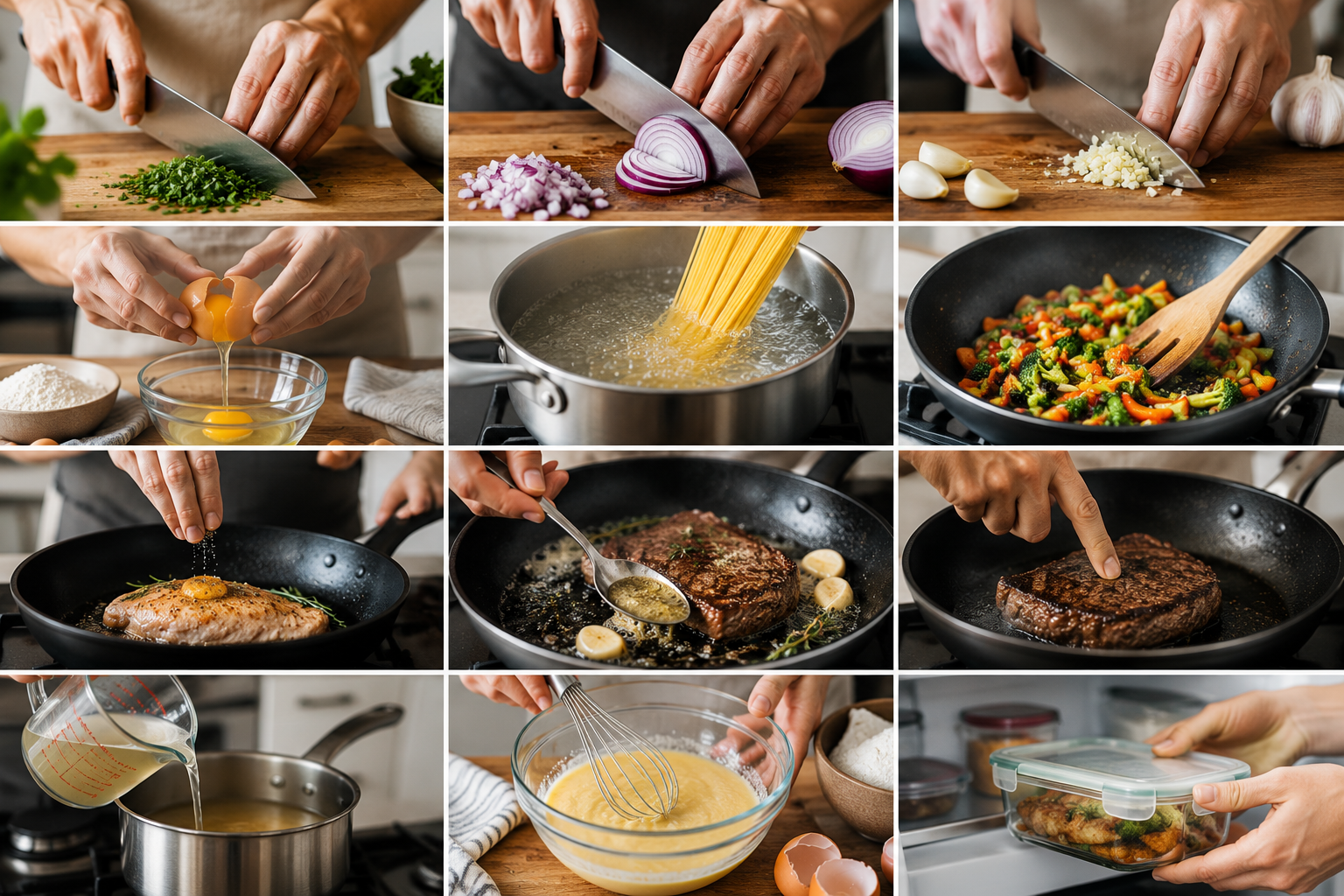
Knife skills are the cornerstone of cooking. Knowing how to chop, dice, slice, and mince quickly and safely makes meal preparation much easier.
- The basic grip: Hold the handle with your dominant hand and place your thumb and index finger on either side of the blade near the handle for control.
- Chopping vs. dicing vs. slicing
- Chopping is quick and rough for vegetables like onions or peppers.
- Dicing creates uniform cubes, ideal for soups or stews.
- Slicing is for thin, even cuts, perfect for meat, bread, or vegetables.
- The claw technique: Curl your fingers inward to protect fingertips while cutting.
Practice makes perfect. I started with onions and carrots, gradually increasing complexity with herbs and proteins. Now, I can prep a week’s worth of vegetables in under 30 minutes.
Learning How to Boil, Simmer, and Poach
Cooking with water is a fundamental skill that applies to countless recipes.
- Boiling: Water at 100°C (212°F). Perfect for pasta, potatoes, and eggs.
- Simmering: Gently bubbling water, ideal for soups, stews, and sauces.
- Poaching: Cooking delicate foods like eggs or fish in water below boiling, ensuring a tender texture.
For example, poaching eggs for a healthy breakfast can seem tricky at first, but with the right water temperature and a splash of vinegar, they come out perfectly every time. These methods are essential for mastering grains, proteins, and vegetables alike.
Mastering Sautéing and Pan-Frying
Sautéing and pan-frying are essential techniques for cooking quickly with flavour.
- Sautéing: Cooking food quickly in a small amount of oil over medium-high heat. Vegetables and small proteins like shrimp or chicken strips are ideal.
- Pan-frying: Uses slightly more oil and lower heat than sautéing. Suitable for foods like cutlets, patties, or fish fillets.
- Tips: Preheat the pan, avoid overcrowding, and season as you go.
I remember the first time I sautéed mushrooms—they were watery and bland. By learning to preheat the pan and cook in small batches, I now get golden-brown mushrooms full of flavour every time.
Understanding Baking Basics
Baking can feel intimidating, but it’s just chemistry in action. Knowing a few key techniques allows beginners to bake bread, cookies, or cakes confidently.
- Measuring ingredients: Baking requires precise measurements. Use cups, spoons, or a digital scale.
- Mixing methods: Learn the difference between folding, whisking, and beating. Overmixing can ruin baked goods.
- Temperature control: Preheat the oven and use an oven thermometer if needed. Baking at the right temperature is crucial for consistent results.
- Timing: Follow the recipe, but check for doneness using a toothpick or visual cues.
My first batch of cookies was flat and burnt on the edges. Once I understood oven temperatures and proper mixing, baking became one of my favourite stress-relieving activities.
How to Roast and Grill Like a Pro
Roasting and grilling are techniques that enhance flavour through caramelisation and browning.
- Roasting: Uses dry heat in the oven, ideal for vegetables, chicken, or potatoes. Toss ingredients in oil, season, and spread evenly on a baking tray.
- Grilling: Direct heat from a grill or stovetop grill pan. Meats, vegetables, and even fruits benefit from this method.
- Tips: Pat proteins dry before grilling, preheat your oven or grill, and resist flipping food too frequently.
For example, roasting carrots with olive oil, salt, and pepper brings out natural sweetness, while grilled chicken gets a smoky, charred flavour. Simple techniques like these elevate everyday meals.
Making Sauces and Dressings
Sauces and dressings transform simple meals into memorable dishes.
- Basic sauces: Learn a few staples like tomato sauce, béchamel, and vinaigrette. They can be used in countless recipes.
- Emulsions: Whisk oil into vinegar or lemon juice to make a smooth salad dressing.
- Flavour balance: Salt, acidity, sweetness, and fat should complement each other. Taste as you go.
I often make a quick vinaigrette for salads or drizzle pan sauce over sautéed chicken. Understanding how flavours balance helps even beginner cooks make meals taste professional.
Cooking Grains and Legumes Properly
Grains and legumes are staples of a nutritious diet, but cooking them correctly is crucial for texture and flavour.
- Rice: Rinse before cooking to remove excess starch; use the right water-to-rice ratio.
- Quinoa: Rinse to remove the bitter saponin coating; cook in a 2:1 water-to-quinoa ratio.
- Lentils and beans: Soak beans overnight to reduce cooking time. Lentils don’t need soaking but should be rinsed.
Cooking grains and legumes well ensures they’re fluffy, tender, and free of bitterness. I often batch-cook rice and lentils on weekends to make weekday meal prep effortless.
Seasoning and Flavoring
Even the best techniques can fall flat without proper seasoning.
- Salt: Enhances flavour. Season throughout the cooking process, not just at the end.
- Herbs and spices: Fresh herbs, dried herbs, and spices can transform simple dishes. Start with familiar flavours like garlic, rosemary, paprika, or cumin.
- Acidity: Lemon juice, vinegar, or yoghurt can brighten flavours.
I learned the importance of tasting while cooking. One pinch of salt or a squeeze of lemon can take a dish from bland to vibrant.
Timing and Multitasking in the Kitchen
Effective timing and multitasking are skills that separate confident cooks from beginners who feel stressed.
- Prep first, cook later: Chop vegetables, measure spices, and portion ingredients before turning on the stove.
- Use multiple burners: Cook rice on one burner while sautéing vegetables on another.
- Resting times: Let meats rest after cooking to retain juices.
I often create a mini cooking timeline in my head before starting. This reduces chaos and ensures everything is ready simultaneously.
Cleaning and Organization Habits
Learning to clean as you cook is just as important as mastering techniques.
- Wash utensils immediately: This reduces clutter and prevents dried-on food.
- Organise workspace: Keep ingredients and tools within reach.
- Store leftovers safely: Label containers and refrigerate promptly.
Good habits here not only save time but also prevent accidents and foodborne illness. I can’t overstate how much easier cooking is when your workspace is organised.
Building Confidence Through Practice
The most important skill of all is confidence. Beginners often hesitate because they fear mistakes. The truth is, every mistake teaches a valuable lesson.
- Start simple: Eggs, pasta, and roasted vegetables are excellent first dishes.
- Repeat recipes: Repetition builds muscle memory and familiarity with flavours.
- Experiment gradually: Swap spices, herbs, or cooking methods to learn how flavours interact.
I started with scrambled eggs and simple pasta dishes. Over time, I became comfortable enough to tackle homemade pizza, curries, and even baked desserts. Practice is the key.
Conclusion
Mastering basic cooking skills is less about talent and more about practice, patience, and understanding the fundamentals. Knife skills, cooking techniques, seasoning, timing, and hygiene are the foundation for building confidence in the kitchen. By starting with these essentials, beginners can gradually explore more complex recipes, flavours, and techniques while saving time, money, and stress. Cooking becomes less of a chore and more of a creative, enjoyable activity when you know your way around the kitchen.
FAQs
1. What are the essential knives a beginner should have?
A chef’s knife, paring knife, and serrated bread knife cover most beginner cooking needs.
2. How can I avoid overcooking vegetables?
Use proper heat, monitor closely, and test with a fork for tenderness. Quick blanching or sautéing often works best.
3. How do I learn to season food correctly?
Taste as you go; start with small amounts of salt or spices and adjust gradually. Balance is key.
4. How do I prevent sticking when sautéing or pan-frying?
Preheat the pan, use enough oil, and avoid overcrowding. Pat meat dry to reduce moisture that causes sticking.
5. Is it better to cook grains in water or broth?
Cooking in broth adds flavour and enhances the dish, but water works if you prefer a neutral base.

Arman Haleem is a passionate food content writer dedicated to simplifying everyday cooking. With a focus on practical recipes, budget-friendly meals, and time-saving kitchen strategies, Arman creates content that fits real-life routines. His approach centers on making healthy eating more accessible without adding complexity. Through Recipe Harbor, he aims to help readers build sustainable cooking habits and feel more confident in the kitchen, regardless of their experience level.