One of the most common kitchen problems is food going rotten before you get the chance to use it. You buy vegetables with noble intentions, store leftovers for later, or stock up on essentials—but a few days later, things don’t look as fresh as they should.
This doesn’t just waste food. It wastes money, time, and effort.
The good news is that you don’t need complicated systems or expensive tools to keep food fresh longer. With a few simple storage habits and a deeper understanding of how different foods behave, you can significantly extend freshness and reduce waste.
If you’re still learning how to manage your kitchen efficiently, starting with something like the Beginner Cooking Guide to Get Started Easily can help you build a strong foundation.
In this article, you’ll learn practical, real-life methods to store food properly so it stays fresh, safe, and ready to use when you need it.
Why Proper Food Storage Matters
Before diving into techniques, it’s important to understand why storage matters so much.
Reduces Food Waste
When food lasts longer, you throw away less. This is especially important when you’re trying to manage a budget.
Saves Time
Fresh ingredients ready to use mean fewer last-minute grocery runs.
Keeps Meals Safer
Proper storage prevents spoilage and reduces the risk of food-related issues.
Makes Cooking Easier
When ingredients are fresh and organized, cooking becomes faster and more enjoyable.
The Basic Principles of Food Storage
No matter what you’re storing, a few universal rules apply.
Keep It Clean
Always store food in clean containers and clean spaces.
Control Moisture
Too much moisture leads to spoilage, while too little can dry food out.
Use Proper Temperature
Some foods need refrigeration, while others last longer at room temperature.
Avoid Air Exposure
Air can speed up spoilage. Use airtight containers whenever possible.
How to Store Common Food Items
Let’s break this down into simple, practical categories.
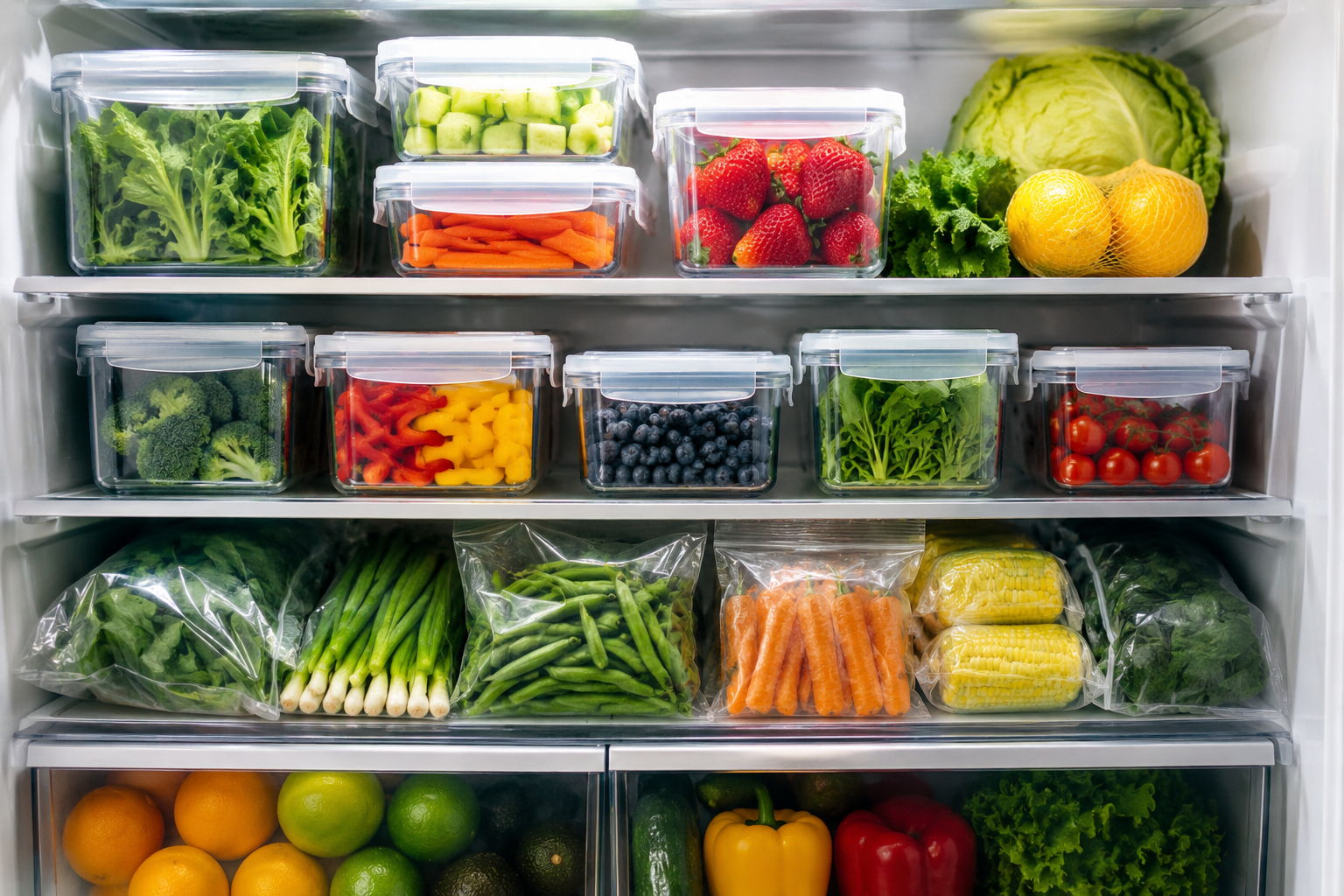
Storing Fruits and Vegetables
Fresh produce is often the most challenging to store properly.
Keep Vegetables Dry
Moisture causes vegetables to spoil quickly. Store them in dry containers or breathable bags.
Separate Certain Fruits
Some fruits release gases that can speed up ripening in others. Keeping them separate helps extend freshness.
Use the Refrigerator Wisely
Leafy greens, carrots, and most vegetables stay fresh longer in the fridge.
Storing Cooked Food and Leftovers
Leftovers are one of the best ways to save time, but only if stored properly.
Cool Before Storing
Let food cool slightly before placing it in the fridge.
Use Airtight Containers
This prevents contamination and keeps food fresh longer.
Label When Possible
Knowing when food was stored helps you avoid keeping it too long.
If you often rely on leftovers for quick meals, you might also find ideas in Last-Minute Meal Ideas When Nothing Is Planned helpful.
Storing Dry Ingredients
Dry foods like rice, pasta, and lentils are simple to store if handled correctly.
Keep Them in Sealed Containers
This protects them from moisture and pests.
Store in a Cool, Dry Place
Avoid areas with heat or humidity.
Check Occasionally
Even dry foods can spoil over time if not stored properly.
Storing Dairy and Eggs
These items require a bit more attention.
Keep Refrigerated
Always store dairy products and eggs in the fridge.
Avoid Frequent Temperature Changes
Taking them in and out repeatedly can reduce freshness.
Use Within a Reasonable Time
Even with proper storage, these items have a shorter shelf life.
Smart Storage for Everyday Cooking
Good storage habits make daily cooking easier.
Organize by Usage
Keep frequently used items within easy reach.
Store Ingredients in Portions
This saves time when cooking.
Keep Similar Items Together
It helps you quickly find what you need.
If your kitchen feels disorganized, improving your setup with How to Organize Your Kitchen for Faster Cooking can make a big difference.
Common Food Storage Mistakes
Avoiding these mistakes can instantly improve how long your food lasts.
Overfilling the Fridge
Too many items block airflow and reduce cooling efficiency.
Storing Hot Food Immediately
Storing hot food immediately can raise the fridge temperature and affect other food items.
Ignoring Expiry Signs
Smell, texture, and appearance are important indicators.
Using Open Containers
Air exposure speeds up spoilage.
If you often face cooking or storage issues, understanding Common Cooking Mistakes and How to Avoid Them can help you fix them.
Practical Tips to Make Food Last Longer
These simple habits can extend freshness without extra effort.
Rotate Older Items First
Use older food before newer items.
Store Food in Smaller Portions
This prevents repeated exposure to air.
Clean Storage Areas Regularly
A clean fridge and pantry help maintain freshness.
How Storage Affects Meal Planning
Food storage and meal planning go hand in hand.
Helps You Cook More Often
Fresh ingredients encourage regular cooking.
Reduces Last-Minute Stress
You already have what you need.
Saves Money Over Time
Less waste means better use of your budget.
If you want to take this further, learning Step-by-Step Guide to Weekly Meal Planning can help you stay consistent.
A Simple Routine You Can Follow
You don’t need a complicated system. A basic routine works well.
- Check your fridge every few days
- Use items that are close to spoiling
- Store new groceries properly
- Keep everything clean and organized
This small habit can make a big difference over time.
A Practical Perspective
From experience, proper food storage is one of those small changes that quietly improve everything in the kitchen. You waste less, cook more, and feel less stressed about what to make.
It’s not about being perfect. It’s about being a little more mindful of how you store what you already have.
Once you get used to it, it becomes a natural part of your routine.
Conclusion
Keeping food fresh longer doesn’t require complicated techniques or expensive tools. With simple habits and a basic understanding of storage, you can:
- Reduce food waste
- Save money
- Make cooking easier
- Keep ingredients fresh and ready to use
The key is consistency. Small improvements in how you store food can lead to significant changes in your daily cooking routine.
Over time, you’ll notice that your kitchen feels more organized, your meals become easier to prepare, and you waste far less food.
FAQs
How long can I store cooked food in the fridge?
Most cooked food can be stored safely for 2 to 3 days if kept in airtight containers and properly refrigerated.
What is the best way to store vegetables?
Keep them dry and store them in the refrigerator, preferably in breathable bags or containers.
Can I store all foods in the fridge?
No, some foods, like certain fruits and dry ingredients, last better at room temperature.
How do I know if food has gone rotten?
Check for changes in smell, texture, or appearance. If something seems off, it’s safer not to consume it.
Does proper storage really save money?
Yes, because it reduces food waste and helps you use everything you buy more efficiently.

Arman Haleem is a passionate food content writer dedicated to simplifying everyday cooking. With a focus on practical recipes, budget-friendly meals, and time-saving kitchen strategies, Arman creates content that fits real-life routines. His approach centers on making healthy eating more accessible without adding complexity. Through Recipe Harbor, he aims to help readers build sustainable cooking habits and feel more confident in the kitchen, regardless of their experience level.