
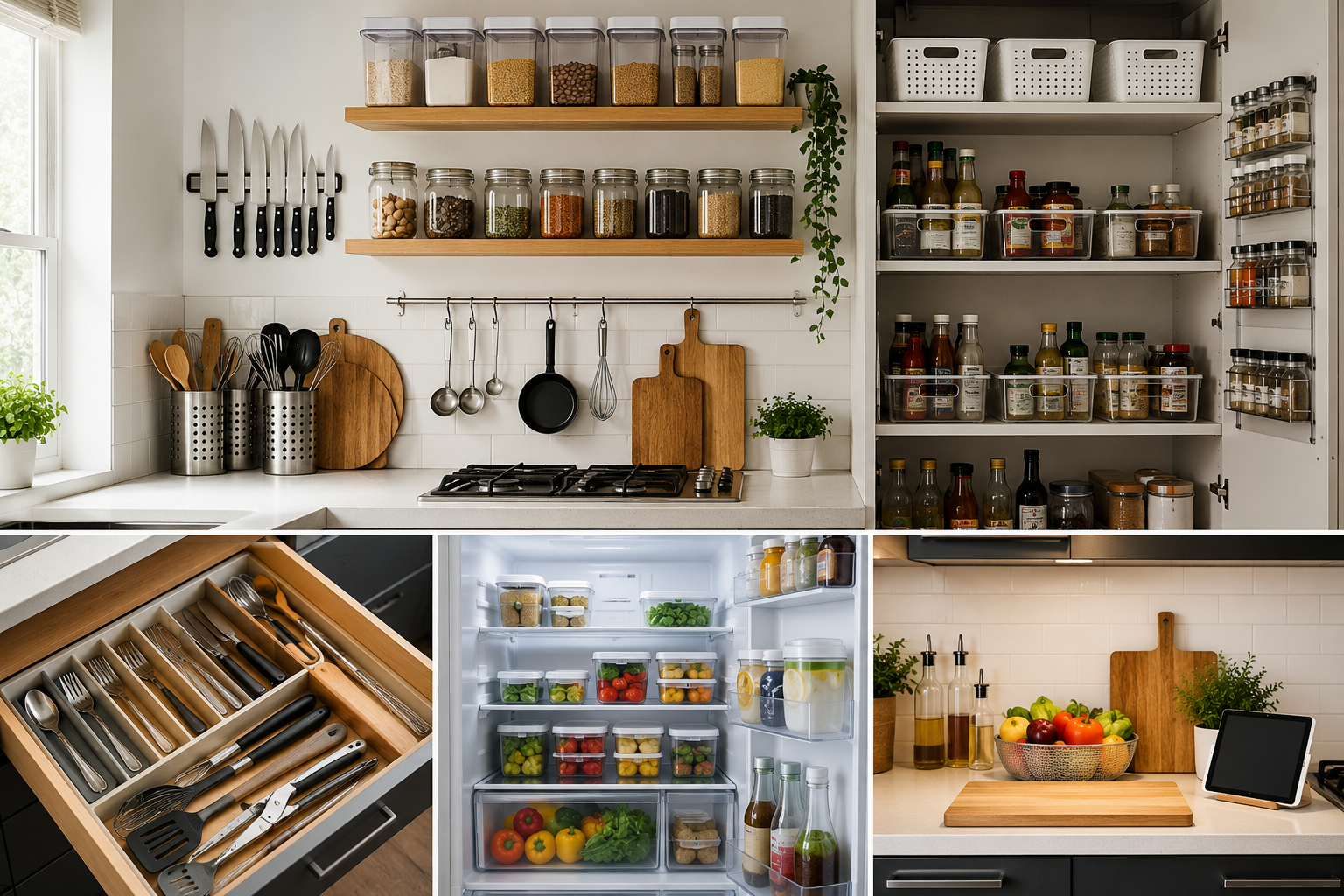
Cooking can be a joy—or a stress-filled chore—depending on how your kitchen is set up. For many beginners and even seasoned home cooks, slow meal prep isn’t about skill but about cluttered counters, hard-to-find ingredients, and disorganised tools. Over the years, I’ve discovered that a well-organised kitchen isn’t just about neatness; it’s about efficiency, reducing stress, and even making meals taste better. In this guide, I’ll share practical tips and strategies for organising your kitchen so that cooking is faster, smoother, and more enjoyable.
Understanding the Benefits of a Well-Organized Kitchen
Before diving into specific techniques, it’s worth considering why organisation matters:
- Time-saving: When tools and ingredients are easy to find, prep and cooking times decrease.
- Less stress: A tidy space helps you focus on cooking rather than searching for items.
- Reduced waste: Proper storage means ingredients last longer, reducing spoilage.
- Safer cooking: Decluttered counters prevent accidents like spills or burns.
I used to spend 10–15 minutes searching for a can opener or garlic press before starting to cook. Once I reorganised my kitchen, that time disappeared entirely, making weeknight dinners much more manageable.
Start with a kitchen audit.
The first step in organising is understanding what you have and how it’s used.
- Declutter: Remove broken items, duplicate utensils, and appliances you never use.
- Inventory your pantry and fridge: Take note of staples, spices, and perishables.
- Assess workflow: Watch yourself cook and note where bottlenecks occur.
For example, I noticed I was constantly running from my prep station to the pantry for oils and spices. Moving these essentials closer to the cooking area cut prep time in half.
Design Your Kitchen Workflow
Efficient kitchens follow a natural workflow: storage → prep → cooking → plating → cleaning.
- Storage zone: The pantry, fridge, and freezer should be logically arranged.
- Prep zone: Counter space near sink and cutting boards.
- Cooking zone: Stove, oven, and frequently used utensils are within reach.
- Cleaning zone: sink, dishwasher, and trash area.
Setting up your kitchen like this eliminates unnecessary movement. For me, having the prep station near the sink and trash bin allows me to chop, rinse, and discard scraps without leaving my workspace.
Declutter Your Counters
Cluttered counters slow you down. Keep only the essentials:
- Daily-use items: Coffee maker, toaster, knife block.
- Store appliances you rarely use, such as a mixer, bread maker, or slow cooker, in cabinets.
- Organise small tools: Use containers or drawer organisers for measuring spoons, peelers, and spatulas.
I used to have a crowded countertop with gadgets I rarely used. By storing the extras in cabinets and keeping only my knife block and cutting board out, cooking felt far less overwhelming.
Organize Your Pantry for Speed
A well-organised pantry is a lifesaver, especially for quick meals:
- Group similar items together: baking, canned goods, grains, snacks, and spices.
- Use clear containers: Store rice, pasta, and beans in see-through jars to easily identify quantities.
- Label everything: Labels save time and prevent expired items from getting overlooked.
- Keep frequently used items at eye level: less-used items can go higher or lower.
I invested in a few clear jars and stackable containers. Being able to quickly grab rice or pasta without digging through shelves made cooking much faster.
Optimize Your Fridge and Freezer
Proper fridge and freezer organisation helps you find ingredients quickly and keeps food fresh:
- Top shelves: Ready-to-eat foods, leftovers, and drinks.
- Middle shelves: Dairy, eggs, and prepared ingredients.
- Bottom shelves: Raw meat, poultry, and seafood in sealed containers.
- Crisper drawers: Separate vegetables and fruits.
- Freezer: Use labelled bins for meats, frozen veggies, and pre-cooked meals.
I learned to keep prepped vegetables in clear containers on the top shelf, ready to grab for quick stir-fries. It cut down prep time dramatically.
Arrange Your Cooking Tools Strategically
The right tools in the right place make cooking seamless:
- Near the stove: Spatulas, tongs, ladles, and frequently used pots and pans.
- Drawer organisers: Store utensils, peelers, and measuring cups in drawers near prep areas.
- Hooks or magnetic strips: Hang knives, scissors, or frequently used gadgets for easy access.
I installed a magnetic knife strip and hooks for frequently used utensils. I no longer waste precious seconds searching for the right tool mid-recipe.
Implement a “Mise en Place” System
“Mise en place” is a French term meaning “everything in its place”. Professional chefs swear by it.
- Prep ingredients before cooking: Chop, measure, and arrange all ingredients in bowls.
- Group ingredients by recipe: Keep herbs, spices, and liquids together.
- Clean as you go: Wash prep bowls or knives to keep workspace clear.
I use this system daily. For instance, while making curry, all spices, chopped vegetables, and proteins are ready in bowls. Cooking becomes stress-free, and I rarely forget ingredients.
Use Vertical Space and Storage Solutions
Maximising vertical space frees up counters and improves access:
- Install shelves: Store less-used items or decorative jars above countertops.
- Use stackable containers: Maximise pantry or fridge space.
- Hang pots and pans: A ceiling rack or wall hooks keep heavy items accessible.
- Drawer dividers: Keep lids, wraps, and small tools organised.
I hung a pot rack over my prep station. Not only does it look stylish, but it also saves time reaching for pans while cooking.
Keep Spices and Oils Within Reach
Frequently used seasonings should never be hidden:
- Spice rack: Keep commonly used spices near the stove.
- Oil dispenser: Store cooking oils in a small caddy close to the burners.
- Rotating spice carousel: Ideal for small kitchens to keep spices organised and accessible.
I set up a small rack with my top 10 spices near my stove. Reaching for oregano or paprika doesn’t interrupt the flow of cooking anymore.
Organize Meal Prep Containers
Meal prep containers are essential for quick lunches or leftovers.
- Use uniform sizes: Stackable containers save fridge space.
- Label containers: Write the date or contents to prevent confusion.
- Assign zones: Keep containers, lids, and wraps together for easy access.
I keep a designated drawer with all containers and lids. When I meal prep on Sundays, everything is ready, saving time and preventing frustration.
Keep a Trash and compost station handy.
Wasting time walking across the kitchen to discard scraps can slow cooking.
- Place a small trash bin near your prep area: This reduces back-and-forth movement.
- Compost container: For vegetables, eggshells, and coffee grounds.
- Line containers: Makes disposal easier and keeps bins clean.
I have a small bin at my prep station and a compost container nearby. It makes chopping vegetables far more efficient.
Label Everything for Faster Access
Labels aren’t just for looks—they improve efficiency.
- Pantry and spice jars: Use clear, consistent labels with names and expiration dates.
- Freezer bins: Indicate contents and date frozen.
- Shelves or zones: Label areas like “Grains”, “Canned Goods”, or “Breakfast Items”.
I label all my jars and bins. During busy evenings, I can find ingredients without wasting time guessing what’s inside.
Maintain a weekly kitchen check.
Organisation isn’t a one-time task; it requires maintenance:
- Weekly clean-up: Wipe counters, reorganise the pantry, and check for expired items.
- Rotate stock: Use older ingredients first.
- Assess workflow: Adjust storage if certain items slow you down.
I spend Sunday afternoons tidying my kitchen. It takes less than 20 minutes but keeps my system running efficiently throughout the week.
Tips for Small Kitchens
Even if you have limited space, organisation is possible:
- Magnetic strips: For knives or spice jars.
- Vertical racks: Stack cutting boards or trays.
- Under-shelf baskets: Increase shelf storage without buying new furniture.
- Multi-purpose tools: Choose tools that serve multiple functions to reduce clutter.
In my small apartment kitchen, vertical shelves and magnetic strips transformed a cramped space into an efficient cooking zone.
Conclusion
Organising your kitchen isn’t about perfection—it’s about efficiency and ease. By assessing your kitchen, decluttering, arranging tools and ingredients strategically, and maintaining the system weekly, you can dramatically reduce cooking time and stress. Techniques like “mise en place”, labelling, and using vertical space make meal prep smoother and more enjoyable. With these strategies, you’ll not only cook faster but also enjoy the process, making the kitchen a space of creativity and comfort rather than chaos.
FAQs
1. How often should I reorganise my kitchen?
Once every few months or when you notice inefficiency or clutter. Weekly maintenance is recommended.
2. What’s the best way to store spices for quick access?
A spice rack near your stove or a rotating carousel keeps frequently used spices within reach.
3. How can I make a small kitchen more efficient?
Use vertical space, magnetic strips, stackable containers, and multipurpose tools.
4. Should I store all appliances on the counter?
No. Keep only daily-use appliances on counters; store rarely used ones in cabinets.
5. How do I maintain efficiency long-term?
Regularly declutter, label containers, follow workflow zones, and conduct weekly checks.

Arman Haleem is a passionate food content writer dedicated to simplifying everyday cooking. With a focus on practical recipes, budget-friendly meals, and time-saving kitchen strategies, Arman creates content that fits real-life routines. His approach centers on making healthy eating more accessible without adding complexity. Through Recipe Harbor, he aims to help readers build sustainable cooking habits and feel more confident in the kitchen, regardless of their experience level.