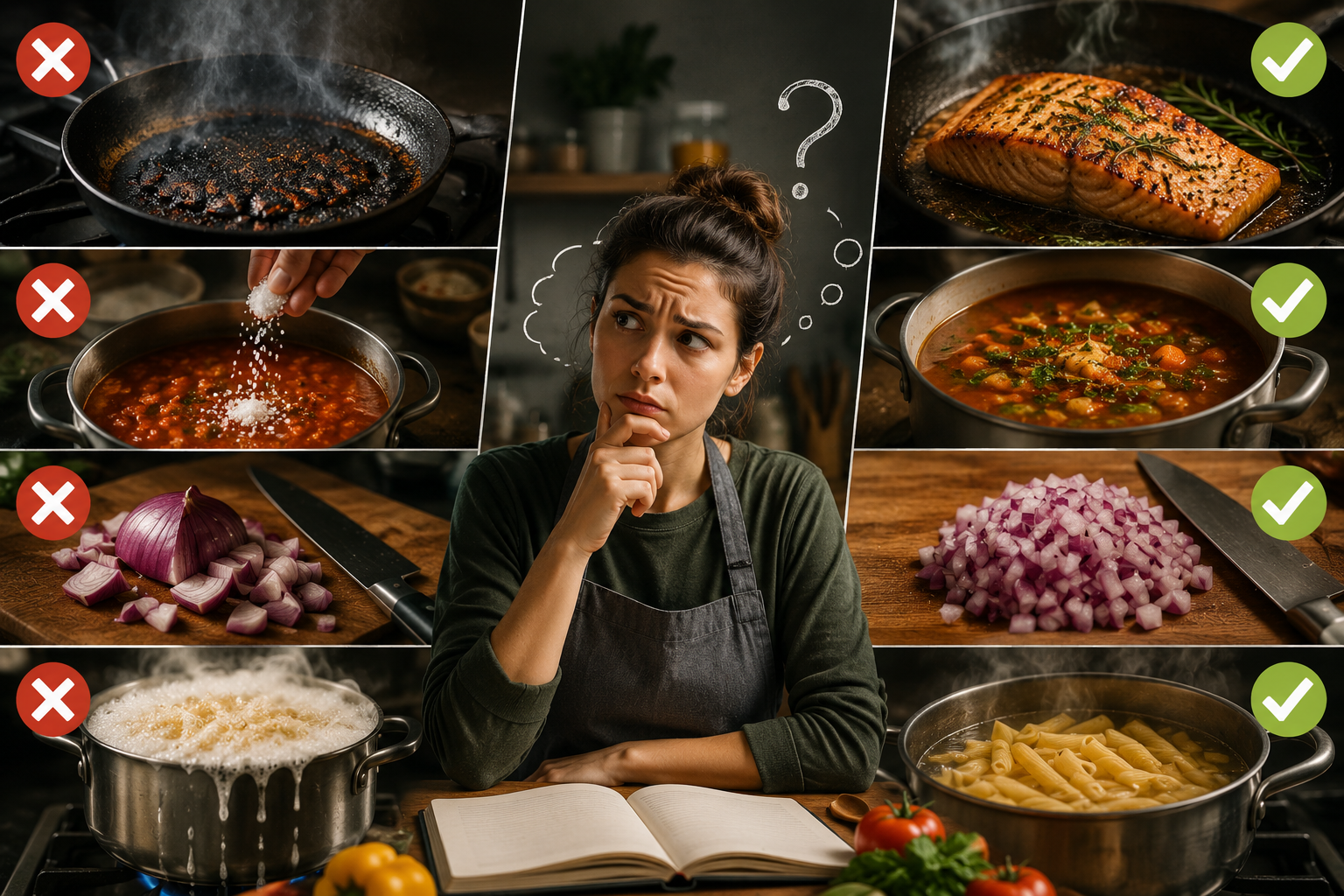
Cooking can be one of life’s greatest joys, but it’s easy to make mistakes—especially if you’re just starting out or trying new recipes. Over the years, I’ve learned that even small errors can affect the taste, texture, and overall success of a meal. The excellent news is that most cooking mistakes are avoidable with simple strategies and a bit of awareness. In this guide, I’ll share common mistakes I’ve seen—and made myself—and provide practical tips to help you cook confidently, efficiently, and deliciously every time.
Overcrowding the Pan
One of the most frequent mistakes in cooking is overcrowding the pan. I remember the first time I tried sautéing vegetables for a stir-fry. I piled them all into a medium pan, and instead of crisp-tender vegetables, I ended up with soggy, unevenly cooked pieces.
How to avoid it:
- Cook in batches if necessary.
- Use a larger pan to give ingredients space to brown.
- Avoid stirring too often; let food sear properly before flipping or stirring.
Proper spacing allows for even cooking and better flavour development, making your meals taste more professional.
Not Prepping Ingredients in Advance
Rushing into cooking without prep can lead to mistakes like burning, missing steps, or unevenly cooked food. Early in my cooking journey, I often started chopping ingredients while the pan was already hot, leading to chaotic timing and a lot of stress.
Practical tip:
- Follow mise en place: chop, measure, and organise all ingredients before you start cooking.
- Keep spices, oils, and utensils within reach.
Having everything ready allows you to focus on the actual cooking process and reduces errors.
Using Dull Knives
A dull knife is more than frustrating—it’s dangerous. I’ve cut myself several times trying to push through a tough vegetable with a blunt knife. Dull knives slip and crush ingredients rather than cutting cleanly, affecting both safety and presentation.
Solution:
- Invest in a good chef’s knife and keep it sharp.
- Learn proper cutting techniques for speed and safety.
- Use a separate paring knife for smaller, delicate tasks.
Sharp knives make prep faster, safer, and more precise.
Not Tasting While Cooking
One of the biggest lessons I learned was that recipes are guidelines, not rules. I used to cook dishes exactly by the book without tasting, only to find they were underseasoned or unbalanced.
How to avoid this mistake:
- Taste at multiple points during cooking.
- Adjust seasoning gradually with salt, pepper, herbs, or spices.
- Remember that flavours develop as food cooks, so check before serving.
Tasting ensures your dishes are flavourful and tailored to your preference.
Cooking at the Wrong Temperature
Temperature control is essential for successful cooking. Overly high heat can burn food, while too low heat can leave it undercooked. I once attempted pan-seared chicken on medium-high heat, only to have the outside charred and the inside raw.
Tips for proper temperature:
- Preheat pans before adding food for even cooking.
- Follow recipe recommendations for heat levels.
- Adjust as needed based on ingredient type and thickness.
Understanding temperature gives you control and prevents frustration with overcooked or undercooked meals.
Overcooking or Undercooking Proteins
Protein is often the trickiest part of cooking. Overcooked chicken becomes dry, steak can be tough, and fish may fall apart. I’ve learned that relying solely on cooking time without checking doneness often leads to disappointing results.
Practical solutions:
- Use a meat thermometer for precision: chicken (165°F), beef (medium-rare, 135–140°F), and fish (145°F).
- Learn visual cues: colour, texture, and firmness.
- Rest meats after cooking to retain juices.
Correct cooking of proteins elevates every dish and improves both taste and texture.
Ignoring Resting Time for Baked Goods
Baking is a science, and skipping rest times can affect results. Early in my experience, I removed bread and cookies from the oven and sliced them immediately, only to find they were dense and crumbly.
Tips:
- Let baked goods cool slightly before slicing or serving.
- Allow doughs or batters to rest if instructed in recipes.
- Follow recommended cooling times for cakes, cookies, and breads.
Patience in baking ensures proper texture, rise, and flavour.
Overusing Oil or Butter
Adding too much fat can make dishes greasy and heavy. I remember my first attempt at a stir-fry that ended up swimming in oil, overpowering the vegetables and sauce.
Tips to avoid:
- Measure oil and butter carefully instead of free-pouring.
- Use non-stick pans to reduce the amount needed.
- Add oil gradually and observe how it coats ingredients.
Controlling fat keeps dishes light, balanced, and healthier.
Not Reading Recipes Fully
It’s tempting to start cooking immediately, but skipping a full read-through leads to mistakes like missing ingredients or steps. I once began a sauce without realising it required simmering for 20 minutes, leading to underdeveloped flavours.
How to avoid:
- Read recipes from start to finish before beginning.
- Highlight ingredients or steps that are tricky or unfamiliar.
- Understand timing and techniques required.
Preparation ensures smoother cooking and fewer surprises.
Failing to Adjust for Altitude or Equipment
Oven temperatures, pan types, and even altitude can affect results. I once baked cookies in a new oven and found they browned too quickly because the heat distribution was different.
Tips:
- Calibrate ovens and adjust temperature if needed.
- Use recommended pans (metal, glass, or non-stick) for accurate results.
- Consider local conditions, like high altitude, for baking adjustments.
Being mindful of your kitchen setup helps maintain consistency and predictability.
Not Cleaning as You Go
A cluttered workspace leads to mistakes, confusion, and frustration. Early on, I often had ingredients, utensils, and dirty dishes all around, which slowed down cooking and increased the chance of accidents.
Solution:
- Wash or rinse items immediately after use.
- Wipe counters between steps.
- Keep a small trash bowl nearby for easy disposal.
Cleaning while cooking keeps the process organised and stress-free.
Overcomplicating Simple Dishes
Sometimes, beginners think a meal isn’t good unless it’s complex. I’ve tried adding too many ingredients or steps to simple recipes, only to mask natural flavours and make the process unnecessarily complicated.
Practical advice:
- Stick to simple techniques and ingredients, especially when learning.
- Focus on balancing flavours rather than adding unnecessary components.
- Experiment gradually as your confidence grows.
Simple, well-executed dishes are often more satisfying than overly complicated meals.
Relying Solely on Spices for Flavor
Spices enhance flavour, but they can’t fix poor cooking techniques. I once over-seasoned undercooked vegetables and ended up with a strong taste but a bland texture.
Tips:
- Focus first on proper cooking methods, heat, and timing.
- Use spices to complement flavours rather than cover mistakes.
- Taste frequently to balance seasoning gradually.
Good technique combined with seasoning creates depth and flavour in every dish.
Learning from Mistakes and Improving
Mistakes are inevitable, but each one is an opportunity to learn. Keep a cooking journal noting what worked, what didn’t, and adjustments for next time. I started tracking recipes, timings, and tweaks, which helped me avoid repeating errors and improved my skills rapidly.
Tips for progress:
- Review mistakes and identify the root cause.
- Practise consistently to reinforce learning.
- Seek advice from tutorials, blogs, or experienced cooks.
Over time, this reflective approach makes you a confident, skilled home cook.
Conclusion
Cooking mistakes are common, but most are easy to prevent with awareness and practice. From overcrowding pans and not prepping ingredients to overcooking proteins and ignoring seasoning, these errors can impact flavour, texture, and confidence. By organising your kitchen, using proper techniques, tasting as you go, and learning from mistakes, you can avoid these pitfalls and make cooking more enjoyable. With patience, planning, and a willingness to experiment, anyone can improve in the kitchen and create meals that are both delicious and satisfying.
FAQs
1. What are the most common cooking mistakes beginners make?
Common mistakes include overcrowding pans, skipping ingredient prep, overcooking proteins, not tasting while cooking, and ignoring proper seasoning.
2. How can I prevent my food from being undercooked or overcooked?
Use proper temperature control, follow timing recommendations, check doneness with visual cues or a meat thermometer, and allow proteins to rest after cooking.
3. Why is prepping ingredients before cooking important?
Prepping ingredients ensures a smooth cooking process, reduces mistakes, prevents missed steps, and helps maintain timing and flavour balance.
4. How can I improve quickly as a home cook?
Practise consistently, learn basic techniques, taste frequently, reflect on mistakes, and experiment gradually to develop skill and confidence.
5. What tools help avoid cooking mistakes?
Essential tools include a sharp knife, cutting board, nonstick pan, saucepan, measuring cups, meat thermometer, and timer to manage cooking precision.

Arman Haleem is a passionate food content writer dedicated to simplifying everyday cooking. With a focus on practical recipes, budget-friendly meals, and time-saving kitchen strategies, Arman creates content that fits real-life routines. His approach centers on making healthy eating more accessible without adding complexity. Through Recipe Harbor, he aims to help readers build sustainable cooking habits and feel more confident in the kitchen, regardless of their experience level.