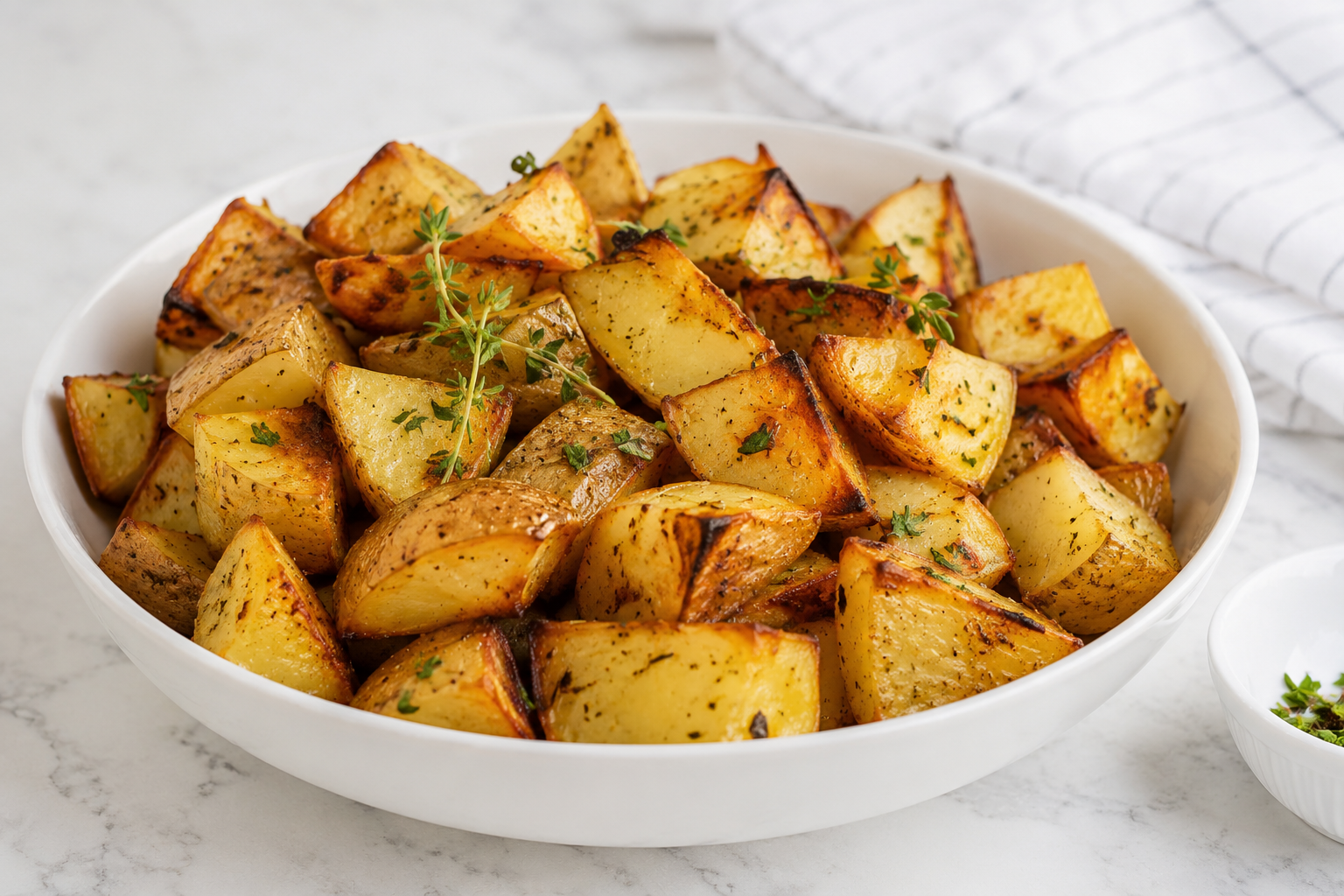
To make crispy, tender-on-the-inside, herb-roasted potatoes, choose a starchy variety, such as brown potatoes. Pat the diced potatoes dry thoroughly, spread them evenly over a baking sheet, and bake them at a high temperature. Before baking, toss the potato cubes with olive oil, salt, pepper, and dried herbs. This ensures crispy potatoes on the outside and tender potatoes on the inside, with a delicious texture.
The goal of cooking potatoes is to achieve the perfect balance: a crispy, golden-brown exterior and a soft, airy interior. Roasted potatoes easily achieve this delicious combination of textures with just a few simple ingredients, many of which you likely have at home. For novice cooks, roasted potatoes are an excellent starting point because they are easy to prepare, require minimal preparation, and are ideal for building confidence in the kitchen.
People all over the world enjoy making their own roasted potatoes because, with just a few common kitchen ingredients, you can easily create a tasty and satisfying dish for any meal. Whether served at an elaborate celebratory meal or as an informal snack with afternoon tea, roasted potatoes are an excellent choice with your favourite sauce. Potatoes have a mild flavour, like a blank canvas, allowing you to combine them with various herbs and spices to your heart’s content.
This recipe is incredibly versatile and is perfect for a quick side dish on a busy evening or a favourite dish for a weekend gathering. If you have more guests, feel free to double the quantities or adjust the spiciness to your liking.
Why These Oven-Roasted Potatoes Work
These roasted potatoes consistently turn out delicious because the cooking method maximises surface area and heat exposure. The high oven temperature crisps the outside rapidly while gently steaming the inside of the potato pieces.
- Crispy edges with soft centres: The combination of oil and high heat guarantees a satisfying crunch.
- Simple pantry ingredients: You do not need expensive or elusive-to-find items to create a restaurant-quality side dish.
- Customisable herb flavours: You can swap the seasonings based on what you have available in your spice cabinet.
- Pairs well with many meals: Roasted potatoes complement almost any protein, from grilled chicken to baked fish.
- Easy to prepare in large batches: A standard baking sheet can hold enough potatoes to feed an entire family.
- Works for lunch or dinner sides: They fit seamlessly into midday meal preps or heavy evening dinners.
Ingredients You Will Need
Gathering the right ingredients is the first step toward achieving the perfect roast. Quality seasonings and the right type of fat will make a significant difference in the final flavour.
Main Ingredients
- Potatoes
- Olive oil
- Garlic
- Salt
- Black pepper
- Dried rosemary
- Dried thyme
Optional Additions
- Paprika
- Parmesan cheese
- Chili flakes
- Fresh parsley
- Onion powder
What Are the Best Potatoes for Roasting?
Selecting the right potato variety directly impacts the texture of your final dish. Different potatoes contain varying levels of starch and moisture, which dictate how they behave in the oven.
Russet Potatoes
Russet potatoes contain high levels of starch and low moisture. This specific composition allows them to develop an incredibly crispy exterior while maintaining a light, fluffy interior. They are widely considered the absolute best choice for classic roasting.
Yukon Gold Potatoes
Yukon Gold potatoes offer a medium starch content and a naturally buttery flavour. While they may not get quite as crunchy as russets, their creamy texture and beautiful golden colour make them a highly popular and delicious alternative.
Red Potatoes
Red potatoes are waxy, meaning they contain high moisture and low starch. They hold their shape extremely well during cooking and possess a firmer texture with a slightly sweet flavour. Because they have very thin skin, you rarely need to peel them before roasting.
Kitchen Tools Needed
You only need a few essential kitchen tools to prepare this recipe efficiently.
- Large baking sheet
- Mixing bowl
- Sharp knife
- Parchment paper
- Spatula
How to Prepare the Potatoes
Proper preparation is just as important as the roasting process itself. Removing excess moisture ensures the oil can coat the surface properly, leading to better crisping.
- Wash and dry the potatoes thoroughly to remove any dirt.
- Cut them into evenly sized pieces so they finish cooking at the exact same time.
- Soak the cut pieces in cold water for thirty minutes if extra crispiness is desired. This draws out excess surface starch.
- Pat the potatoes completely dry with a clean kitchen towel before applying any oil or seasoning.
Step-by-Step Oven Roasting Instructions
Following these steps closely will prevent your potatoes from steaming in their juices and help them develop that sought-after crunch.
Seasoning the Potatoes
- Add the completely dry potatoes to a large mixing bowl.
- Toss the pieces generously with olive oil and your chosen herbs.
- Coat the potatoes evenly with the seasoning blend so every bite carries maximum flavour.
Arranging on the Baking Tray
Spread the seasoned potatoes evenly across your baking tray. You must avoid overcrowding the pan; the potatoes need space around them so the hot air can circulate properly. If the potatoes are touching, they will steam rather than roast. Use a single layer for the best results.
Roasting Process
- Preheat your oven properly to 400°F (200°C) before putting the tray inside.
- Roast the potatoes for approximately 35 to 45 minutes, depending on the size of your cuts.
- Flip the potatoes carefully with a spatula halfway through the cooking time.
- Continue roasting until the edges are a deep golden brown and a fork pierces the centre with zero resistance.
Common Mistakes to Avoid When Roasting Potatoes
Even minor errors during preparation can lead to disappointing results. Keep an eye out for these frequent missteps.
- Overcrowding the baking tray prevents proper air circulation and leads to soggy potatoes.
- Skipping the drying step leaves water on the surface, which blocks the oil from crisping the edges.
- Using too much oil makes the final dish greasy instead of crunchy.
- Cutting uneven potato pieces causes smaller chunks to burn before the larger ones finish cooking.
- Not flipping the potatoes during roasting results in uneven browning.
- Underseasoning before baking leaves the thick interior of the potato tasting bland.
Herb Variations You Can Try
Once you master the basic roasting technique, you can alter the flavour profile to match different main courses.
Garlic Rosemary Version
Toss the potatoes with minced fresh garlic and generous amounts of dried rosemary. The piney aroma of the rosemary pairs exceptionally well with roasted meats like lamb or beef.
Spicy Chili Herb Potatoes
Add a teaspoon of chilli flakes and a dash of smoked paprika to the standard herb mix. This variation provides a gentle, warming heat that works beautifully alongside barbecue dishes.
Parmesan Herb Potatoes
Sprinkle freshly grated Parmesan cheese over the potatoes during the final five minutes of roasting. The cheese will melt and form a savoury, crispy crust around the edges of the potato pieces.
Lemon Herb Potatoes
Squeeze fresh lemon juice over the potatoes immediately after removing them from the oven. The sharp acidity cuts through the richness of the olive oil and brightens the overall flavour profile.
What to Serve with Roasted Potatoes
This versatile side dish elevates a wide variety of meals.
- Grilled chicken
- Baked fish
- Burgers
- Omelets
- Fresh salad
- Yogurt dip
How to Store and Reheat Leftovers
Proper storage and reheating techniques ensure your leftover potatoes remain enjoyable the next day.
Refrigerating
Place any leftover potatoes in an airtight container only after they have cooled completely to room temperature. You can store them safely in the refrigerator for up to four days.
Reheating in the Oven
To restore the crispiness of the potatoes, reheat them in a 400°F (200°C) oven for about ten minutes. Spread them out on a baking sheet just as you did when cooking them originally.
Avoiding Soggy Potatoes
Never reheat roasted potatoes in the microwave if you want them to remain crispy. Microwaves heat the water molecules inside the potato, which turns the crispy outer layer completely soft and mushy.
Frequently Asked Questions
Can I leave the potato skin on?
Yes, potatoes can be peeled. Leaving the skin on adds texture, enhances the rustic flavour of the dish, and increases dietary fibre intake. However, be sure to rinse the potatoes well with cold water before cutting them.
Why don’t my potatoes get crispy after baking?
Potatoes usually do not get crispy if they are placed too close together on the baking sheet, the oven temperature is too low, or if they were not dried sufficiently before being greased. A crispy skin does not thrive in a moist environment.
Can I use fresh herbs instead of dried herbs?
If you use fresh herbs, add delicate fresh herbs, such as parsley or coriander, after the potatoes have been baked. Woody fresh herbs such as rosemary and thyme can withstand the baking process, but dried herbs are generally more heat-resistant and burn less easily.
Can baked potatoes be frozen?
Can baked potatoes be frozen? Yes. Once the baked potatoes have cooled completely, spread them out on a baking sheet and freeze them individually. Then store them in freezer bags. Before serving, heat them directly in the oven at a high temperature; this helps to restore some of their original texture.
Conclusion
Crispy, herb-roasted potatoes are a cooking technique that is easy to learn and certainly worth trying. With simple ingredients and a handy preparation method, this dish quickly becomes a staple in every home cook’s repertoire. The amount of herbs and spices can be adjusted to your taste, ensuring you never get tired of this classic, crispy side dish.

Arman Haleem is a passionate food content writer dedicated to simplifying everyday cooking. With a focus on practical recipes, budget-friendly meals, and time-saving kitchen strategies, Arman creates content that fits real-life routines. His approach centers on making healthy eating more accessible without adding complexity. Through Recipe Harbor, he aims to help readers build sustainable cooking habits and feel more confident in the kitchen, regardless of their experience level.